
Nordic campaign aims to prevent littering before it happens
A coffee cup forgotten on a bench. An ice cream wrapper wedged between the planks of a pier. A piece of packaging falling out of a pocket. Small, unconscious actions can lead to littering. Now, eight Nordic organisations are launching a joint campaign to prevent littering before it happens, and to find a common language to describe this type of behaviour.
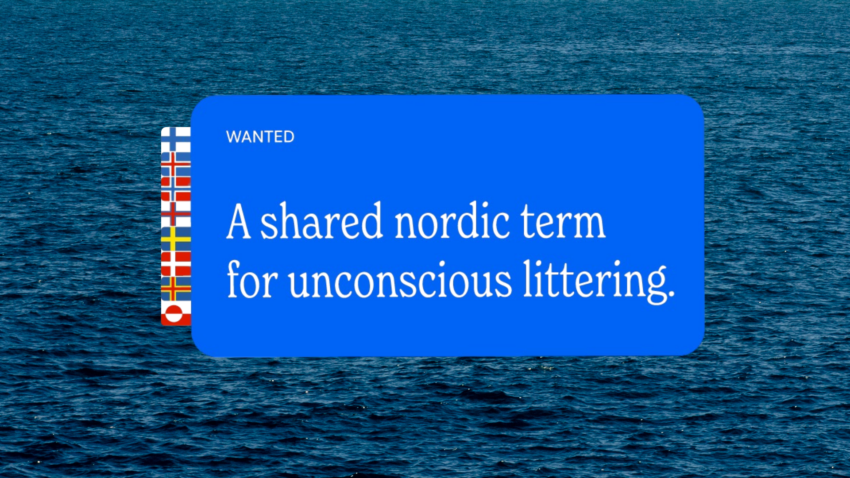
What does a forgotten coffee cup, an ice cream wrapper tucked between two pier planks, and a small piece of packaging falling out of a pocket have in common?
They can all end up as litter in our streets and nature.
Through the network Nordic Alliance on Marine Litter (before: Nordic Coastal Cleanup), organisations across the Nordic region work together to prevent both marine and land-based litter. The network is now launching a joint communication campaign aimed at raising awareness of the small everyday actions that can cause littering.
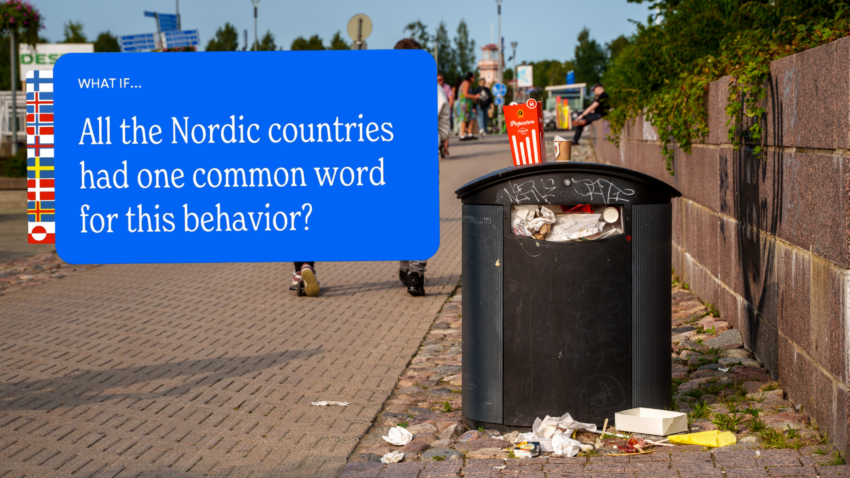
At the same time, the network wants to explore whether there is a common Nordic term that can describe this type of behaviour.
– We lack a good term for actions that may not be perceived as littering by the person carrying them out, but which nevertheless result in waste ending up in the environment. By giving this behaviour a name, we hope to raise awareness of how littering actually occurs, says Astrid Kordal Næss, project manager of the campaign at Keep Norway Beautiful.
Litter knows no borders – even unconscious actions can cause littering
The campaign focuses on everyday situations that many people can relate to. The tear-off corner of a snack wrapper falls out of your pocket when you reach for your phone. You put down your coffee cup to tie your shoelaces and forget it when you rush to catch the bus. Or you place a bottle on top of a litter bin instead of inside it, only for the wind to blow it away.
Even small actions can result in litter ending up in nature.
– The goal of the campaign is to make people more aware of these situations and help ensure that fewer items end up as litter, explains Kordal Næss.
As part of the project, the organisations have gathered experiences, research and data on littering and consumption habits from across the Nordic countries. This knowledge forms the basis of the campaign’s messages and content.
The campaign will go on social media and be published through the network’s channels and shared by partners throughout the Nordic region.
Additionally, the network aims to increase awareness of how littering occurs and how each of us can be part of the solution.
Knowledge from the Nordic region
As part of the project, the organisations have gathered experiences, research and data on littering and consumption habits from across the Nordic countries. This knowledge forms the basis of the campaign’s messages and content. The campaign will go on social media and be published through the network’s channels and shared by partners throughout the Nordic region.
Additionally, the network aims to increase awareness of how littering occurs and how each of us can be part of the solution.
The campaign is funded by the Nordic Council of Ministers.
What is Nordic Alliance on Marine Litter?
The network was established in 2017 with support from the Nordic Council of Ministers and has since collaborated on knowledge gathering, marine litter monitoring and joint Nordic clean-up initiatives. Nordic Alliance on Marine Litter consists of:
CSR Greenland (Greenland)
Rudda Føroyar (Faroe islands)
Håll Skärgården Ren rf Ålan (Åland islands)
Veraldarvinir (Iceland)
Pidä Saaristo Siistinä ry (Finland)
Ren Natur (Denmark)
Håll Sverige Rent (Sweden)
Hold Norge Rent (Norway)